
Your complete electrical partner, from concept to high voltage.
Precision Engineering Behind Every Electrical Work, From Residential to Mega-Scale.
That ₱30 Adapter Could Be the Most Expensive Thing in Your House: The Truth About the Third Prong
In a lot of Philippine homes, especially older houses and rentals, the outlet only has two holes. But newer refrigerators, washing machines, aircons, and computers come with a third prong on the plug.
The usual workaround? Buy a ₱30 "3-to-2 adapter" at the hardware store, or just snip off the round prong with pliers. The appliance works, nothing seems wrong, so we figure it's all good.
But there's one important question nobody asks: what was that prong actually for?
Knowing why the third prong exists is the first step to protecting your household. This guide explains how grounding works, why a "tingling" appliance is a warning sign, and how to get your protection back the right way.
Video Credit: Insider Tech
Why Removing the Ground Is a Bad Idea
The third prong is the ground, and taking it away removes a critical safety path:
The Ground Connects the Metal Body: The third prong links the appliance's metal body, like the fridge casing or the washing machine drum, to your house's grounding system.
It's Electricity's Emergency Exit: As we explained in The Silent Hazard in Filipino Homes, the ground is electricity's emergency exit. When something breaks inside the appliance and the live wire touches the metal body, the current flows out through the ground wire, and the breaker or GFCI can trip.
Without It, the Current Just Waits: Once the ground is gone, the current simply sits on the metal body, waiting for the next path to ground. That path is you, especially if your hands are wet or you're barefoot on the kitchen or laundry floor.
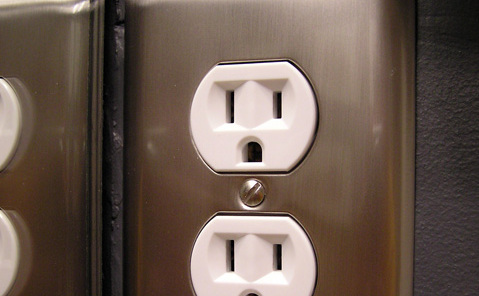
"It Just Tingles a Little": Why That's Not Normal
One of the most common household stories goes like this: "There's just a little bit of electricity when you touch the fridge or the washing machine, but it's fine." It's not fine.
- It's a Sign of Leakage: That tingle means current is leaking onto the appliance's body with no proper path to ground.
- It Can Get Worse: It's small today, but tomorrow it could be bigger.
- What to Do Instead: Stop using the appliance and have it checked, instead of just getting used to it.
The cheapest adapter at the hardware store can turn into the most expensive mistake in your home. Saving ₱30 isn't worth the protection you just threw away.
Video Credit: DIY With JC
Why the Philippine Electrical Code (PEC) Treats Grounding as a Must
The PEC treats grounding as a basic requirement, not an optional extra:
- Grounding-Type Receptacles: Under the PEC, outlets in new installations have to be grounding-type (with a hole for the ground) and connected to a continuous equipment grounding conductor.
- Proper Fixes for Old Outlets: Old ungrounded outlets have proper fixes, like installing a grounding conductor or adding GFCI protection. Cutting off the plug's prong isn't one of them.
- Equipment Grounding: Appliances with metal bodies are designed to be grounded. Remove the ground, and you remove the protection the manufacturer built in.
3 Steps to Get Your Grounding Protection Back
Getting your protection back means swapping shortcuts for fixes that meet code:
1. Don't Cut the Ground Pin or Leave the Adapter On for Good
If a plug's ground pin has already been cut, replace the plug. An adapter isn't the answer, especially for the fridge, washing machine, water heater, and aircon.
2. Find Out Whether Your Outlets Are Grounded
A cheap plug-in outlet tester can quickly show whether an outlet has ground. But a proper check, including your house's grounding electrode, is a job for a licensed electrician.
3. Upgrade the Right Way
Have a grounding conductor and grounding-type outlets installed, starting with the kitchen, laundry area, bathroom, and wherever your big appliances are. Add GFCI or RCD protection for wet areas. That's why proper grounding matters in every home.
This educational guide is brought to you by Lumenova Philippines as part of our ongoing public awareness campaign for safer Filipino homes and compliant electrical engineering practices.
Safe, Smart, Certified
Electrical Solutions
for the Philippines
Gusto Mo Bang Mag-Solar Nang Walang Nilalabas na Cash?
- 💸 Walang Cash Limit at 0% DP – Large home? Multiple aircons? No problem. Get funded for any system size through our partner banks with ₱0 upfront cost. Kami ang mag-aasikaso ng requirements.
- 🛡️ May Kasamang Fire Insurance – Zero anxiety over accidents or damage. Your investment is protected from day one with built-in Fire Insurance coverage verified by our certified engineering team.
- 📉 Start Saving on Electricity – Drastically drop your monthly bills the moment your system turns on. Run your household appliances guilt-free.
- 🔌 Kumita sa Grid (Net Metering) – Turn your roof into a money-maker. Sell your excess solar electricity back to the grid to earn direct bill credits.
Slash Operating Costs with Clean Energy
- 💸 0% DP, No Cash Limits – Capitalize on Unlimited Bank Financing with ₱0 Down Payment. We handle 100% of the bank paperwork and approvals.
- 📉 Massive Opex Savings – Cut your commercial peak electricity costs by up to 70% from day one. Run your operations and ACs guilt-free.
- 🛡️ Built-In Fire Insurance & Top Tech – Maximized safety and asset protection using smart microinverters, rapid-shutdown tools, and certified Fire Insurance coverage.
- 🔌 Turnkey Installation & Net Metering – Complete, hassle-free handling from engineering design to automated Net Metering utility connection. Kami ang mag-aasikaso.
Certified Blueprints & Precision Calculations
- 🛡️ Built-In Fire Insurance – Total liability protection from day one. Every commercial installation is backed by comprehensive Fire Insurance coverage verified by our engineering team.
- 🛡️ 100% PEC Compliance – Receive official blueprints, load calculations, and Single-Line Diagrams (SLD) ready for smooth LGU building permits and utility grid connection.
- ⚡ Advanced Safety Analytics – Complete protection with full arc-flash and short-circuit testing to safeguard your facility and qualify for built-in Fire Insurance.
- 🏗️ Expert Oversight – Fully engineered and managed by veteran solar professionals with international mega-project experience.
Complete Electrical Work
from Concept to High Voltage
- 🏗️ Full Build-Outs & Equipment – Full-scale wiring infrastructure, heavy equipment supply, custom safety enclosures, and strict PEC-compliant engineering.
- 🔬 Rigorous System Testing – Complete safety inspections, arc-flash analytics, and rigorous commissioning before final handover.
- 🔋 Future-Ready Integration – End-to-end setups engineered for modern EV charging stations and smart grid integrations.